
Introduction
A cozy bedroom should feel like a peaceful retreat where you can unwind at the end of a long day. Soft bedding, warm lighting, calming colors, and thoughtful furniture choices can make a room feel more welcoming without requiring a complete makeover. Whether you prefer a neutral sanctuary, rustic textures, or a modern and comfortable style, these cozy bedroom ideas offer practical inspiration for different spaces and budgets. Discover simple ways to create a bedroom that feels warm, inviting, and beautifully personal.
1. Layer Soft Bedding for a Cozy Feel

Layered bedding is one of the easiest ways to make a bedroom feel warm and inviting. Start with comfortable cotton sheets, add a quilt or duvet, and finish with a soft throw folded across the foot of the bed. Combining different textures creates depth without relying on bold colors. Cream, beige, and warm white bedding work especially well because they create a peaceful foundation that suits modern, traditional, and farmhouse interiors.
Complete the look with a few pillows in different sizes, keeping their colors coordinated for a balanced arrangement. A knitted cushion or textured blanket can add interest while making the bed look extra comfortable. Avoid adding so many layers that the bed becomes difficult to use every day. Choose materials that feel pleasant against the skin and are easy to wash, so your cozy bedroom remains practical as well as attractive.
2. Use Warm Lighting for a Relaxing Atmosphere
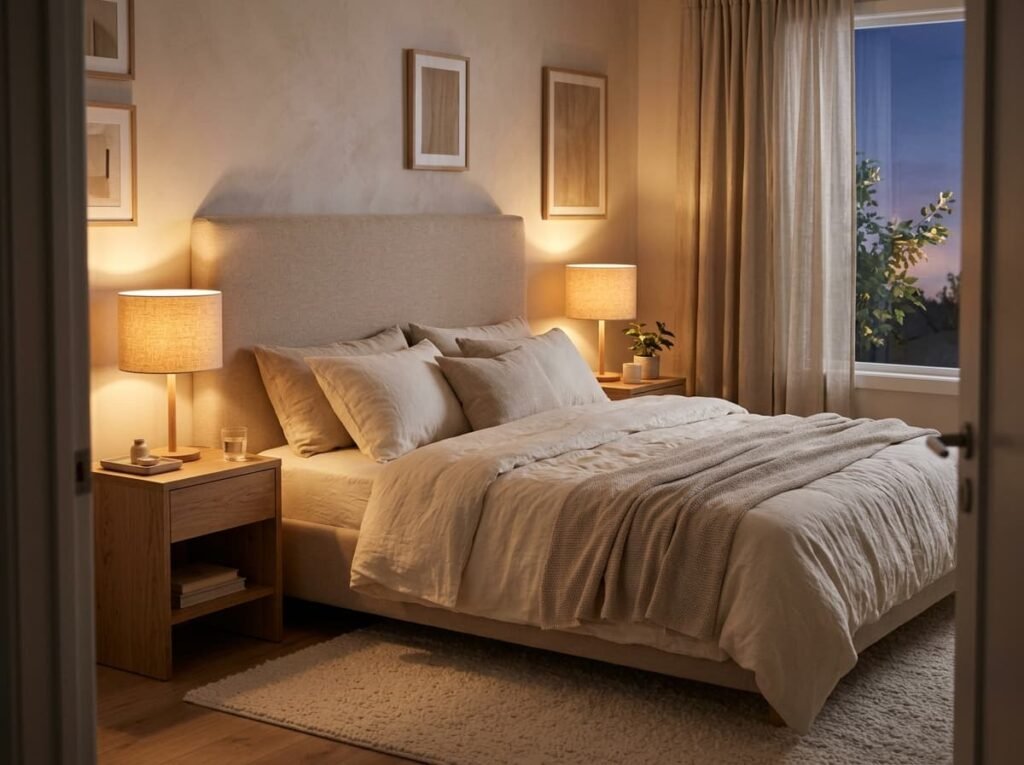
Lighting can completely change how a bedroom feels, especially during the evening. Instead of relying only on a bright overhead fixture, combine bedside lamps, wall sconces, or a softly glowing floor lamp. Warm white bulbs help create a relaxed atmosphere, while fabric lampshades soften the light and complement cozy textiles. Position lights where they are useful for reading or winding down, keeping the room comfortable without creating harsh shadows or excessive brightness.
For an inviting result, use two or three light sources at different heights rather than illuminating every corner equally. A bedside lamp can provide focused light, while a floor lamp near a chair creates a gentle reading area. Choose fixtures that match the room’s style, whether that means natural wood, brushed metal, or simple ceramic bases. Thoughtful lighting adds warmth and dimension, making even a plain bedroom feel more personal and welcoming after sunset.
3. Choose a Warm Neutral Color Palette
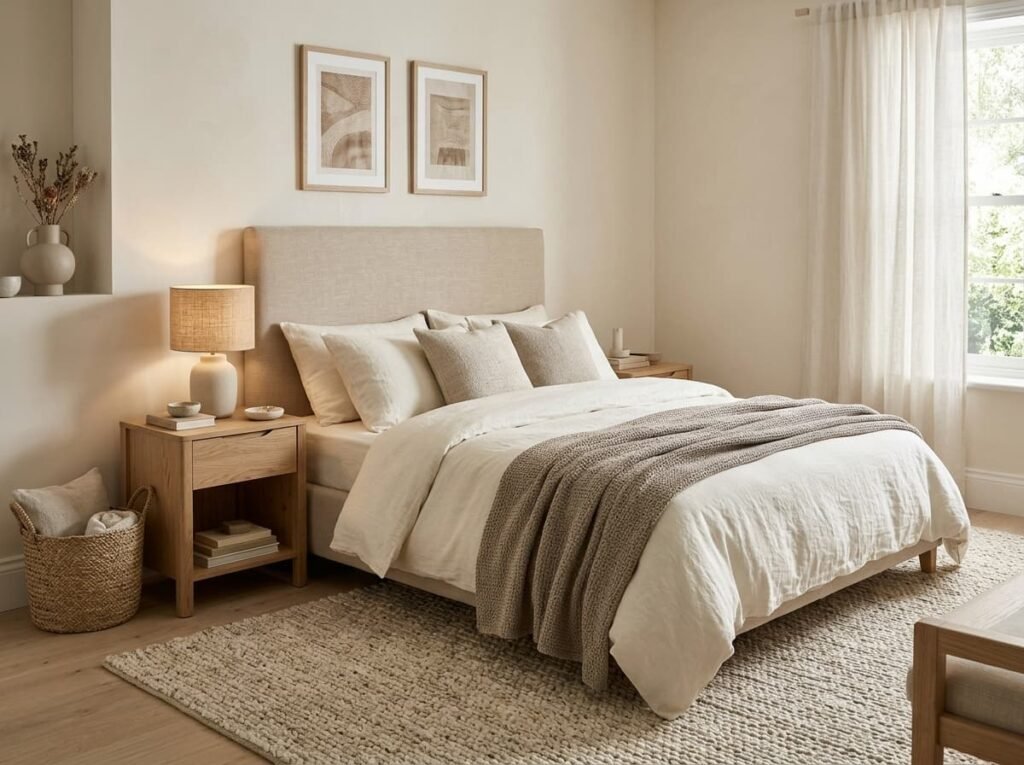
Warm neutral colors can make a bedroom feel calm, timeless, and comfortable. Consider shades such as ivory, oatmeal, sand, warm taupe, and soft beige for walls, bedding, or larger furniture pieces. These colors work together without creating strong visual contrast, helping the room feel restful. Natural wood and woven accessories introduce additional warmth, while different fabric textures prevent the palette from appearing flat or overly plain.
To keep the design interesting, combine at least two or three related tones instead of using exactly the same shade everywhere. For example, pair cream bedding with beige cushions and a warm taupe throw. A small accent in muted terracotta or olive can provide gentle contrast without disturbing the peaceful atmosphere. This palette suits both large and small bedrooms, and it is easy to refresh with seasonal accessories. The result is a welcoming space that feels coordinated without looking overly styled.
4. Add a Chunky Knit Blanket

A chunky knit blanket brings texture and comfort to a bedroom with very little effort. Drape one across the foot of the bed or fold it over a reading chair to create an inviting focal point. Cream, oatmeal, and soft gray are versatile choices that work with many bedding colors. The thick stitches add visual depth, making the room feel warmer even when the rest of the decor is simple and understated.
Balance the blanket’s heavy texture with smoother materials such as cotton sheets, linen pillowcases, or a quilted duvet. Avoid adding too many chunky accessories in the same area, as the room may begin to feel visually crowded. If your bedroom has dark furniture, a pale knitted blanket can brighten the bed and soften the overall appearance. Choose a size that suits your mattress or chair, and keep it easy to move when you need extra warmth.
5. Create a Cozy Reading Corner
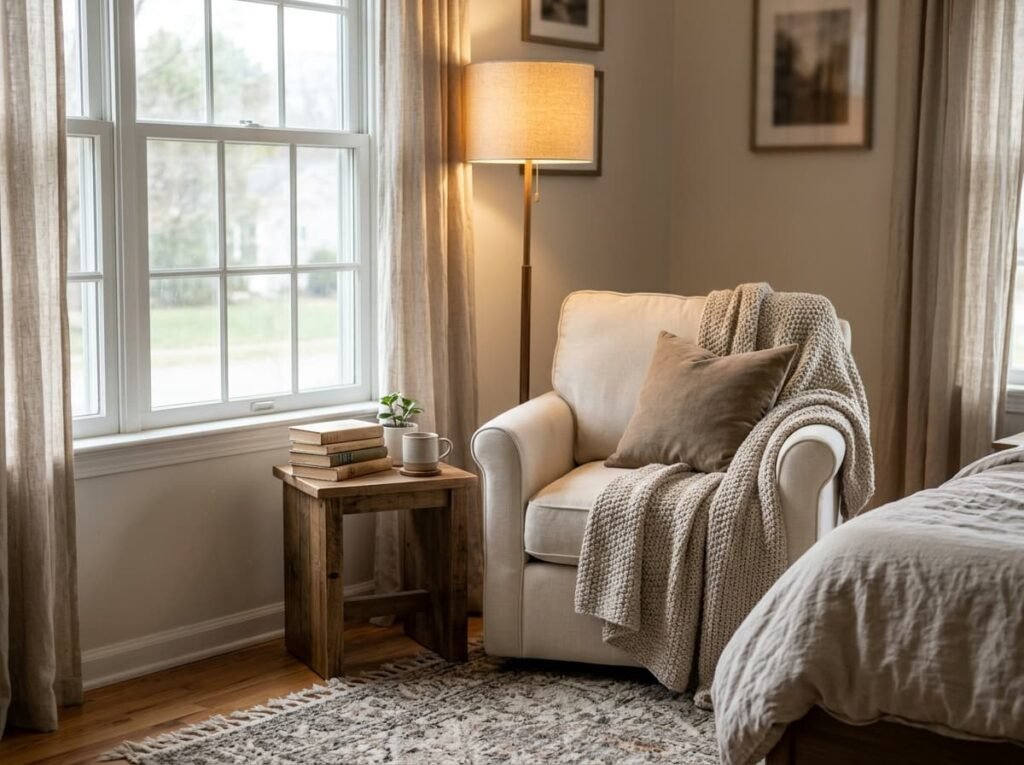
A small reading corner can make a bedroom feel more personal and useful. Place a comfortable chair beside a window or in an unused corner, then add a soft throw and a compact side table. A floor lamp or adjustable reading light provides illumination, while a cushion makes the chair feel inviting. Choose fabrics and colors that coordinate with the bedding so the corner feels connected to the rest of the room rather than like a separate arrangement.
Keep the setup proportionate to the available space. A compact upholstered chair works better than an oversized armchair in a small bedroom, while a narrow side table can hold a book and a cup. Add a small basket for blankets if you have room, but avoid filling the corner with unnecessary accessories. This simple arrangement creates a quiet place to read, relax, or enjoy a few peaceful minutes before bedtime without requiring a full room redesign.
6. Decorate With Natural Wood
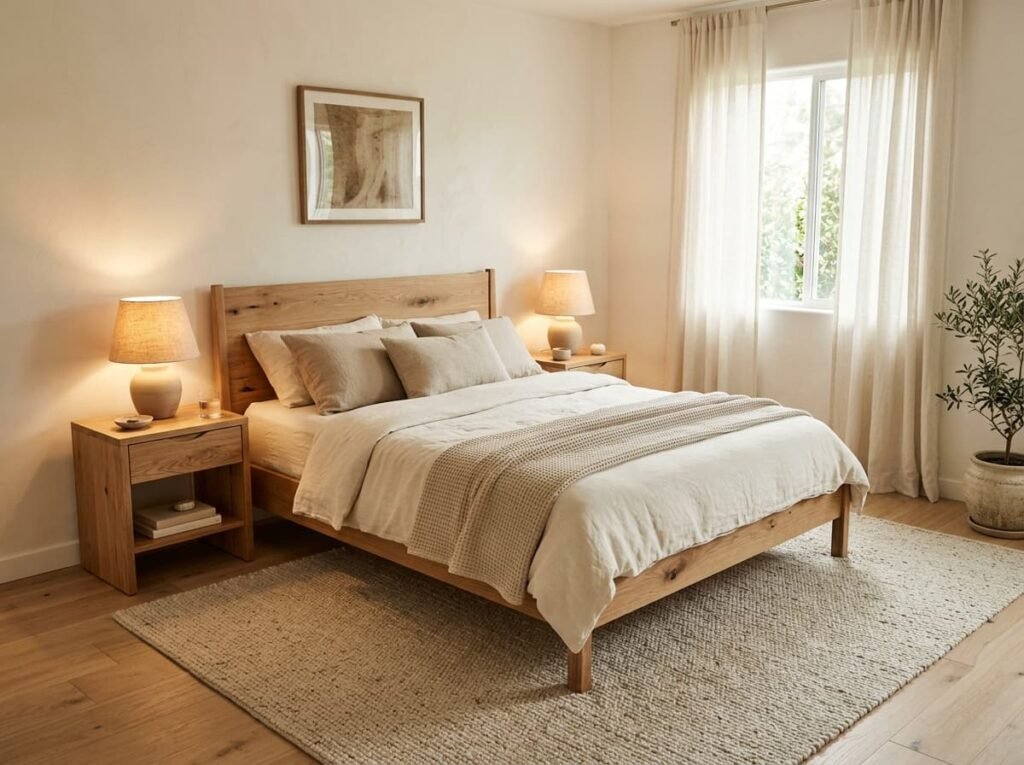
Natural wood introduces warmth and character, making a bedroom feel grounded and inviting. A wooden bed frame, bedside table, or small bench can add texture without requiring additional decoration. Light oak creates an airy Scandinavian appearance, while walnut and deeper wood tones offer a richer, more traditional mood. Pair wooden furniture with soft bedding and neutral walls to let the natural grain become an important part of the room’s design.
For a coordinated look, repeat similar wood tones in two or three places rather than mixing many different finishes. A wooden headboard can work beautifully with matching nightstands, while a woven basket adds another natural texture. If your furniture is dark, use pale bedding and lighter curtains to balance the room. The goal is not to make every item match perfectly, but to create a comfortable combination of materials that feels intentional and easy to live with.
7. Use Floor-Length Curtains
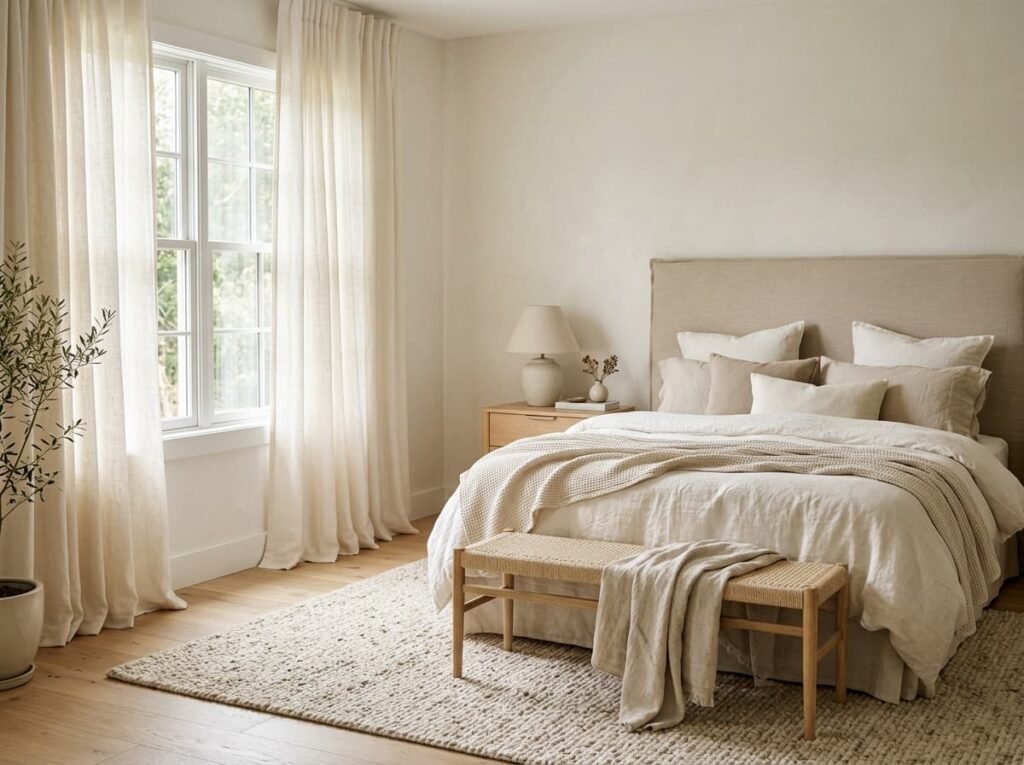
Floor-length curtains can make a bedroom feel softer and more finished. Choose linen-look or cotton curtains in warm white, beige, or muted taupe to complement the bedding and wall color. Hanging the curtain rod slightly above the window frame can help draw the eye upward, creating the impression of greater height. When the fabric falls close to the floor, it adds a graceful vertical line that makes the room feel more thoughtfully styled.
Consider the amount of natural light you want during the day. Light-filtering curtains create a soft glow, while lined or blackout options can help darken the room for sleeping. If the bedroom is small, avoid heavy patterns that compete with the rest of the decor. Coordinate the curtain color with one or two bedding accents for a cohesive look. This simple change can make the room feel more private, comfortable, and inviting without replacing major furniture pieces.
8. Bring in Soft Green Accents
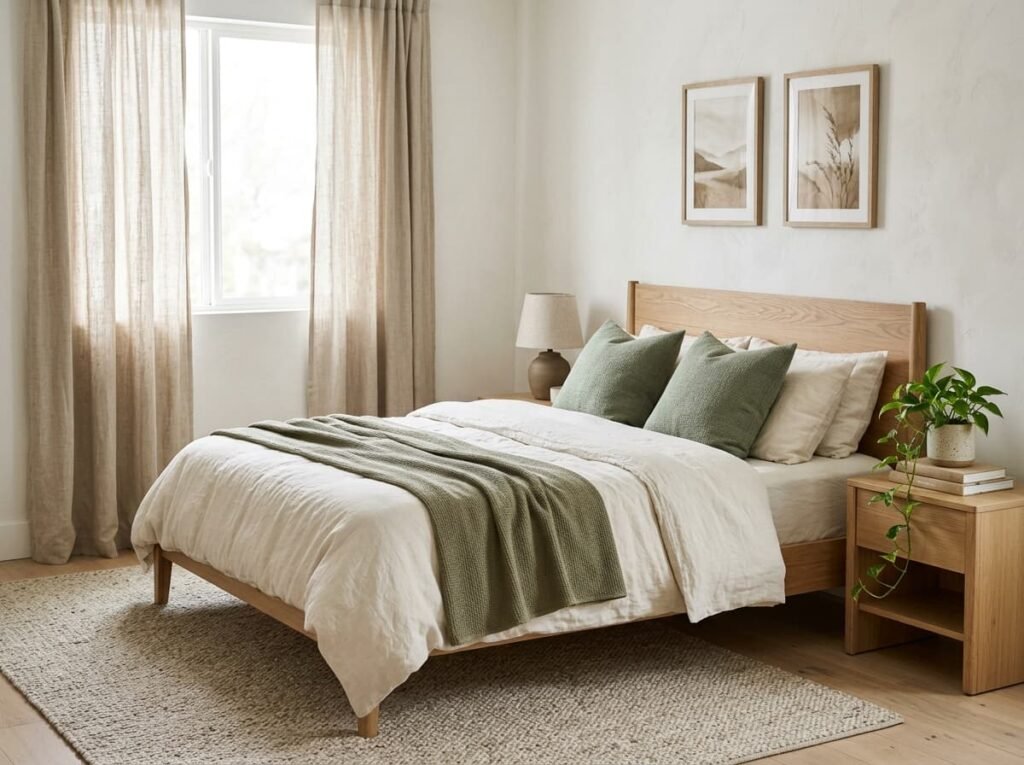
Soft green accents can make a bedroom feel fresh while maintaining a relaxing atmosphere. Sage, muted olive, and dusty green work especially well with cream bedding, warm wood, and beige textiles. Introduce the color through pillows, a throw, a small upholstered chair, or a piece of artwork. These gentle shades add interest without the strong contrast of brighter colors, helping the room feel connected to nature.
Keep the rest of the palette simple so the green accents remain noticeable without overwhelming the space. A small plant can echo the color, while a woven basket or natural wood table adds warmth. If you prefer a subtle effect, use green in only one or two accessories rather than changing the bedding and curtains together. This approach is easy to update over time, making it a practical choice for anyone who enjoys a calm bedroom with a little natural color.
9. Make a Small Bedroom Feel Cozy
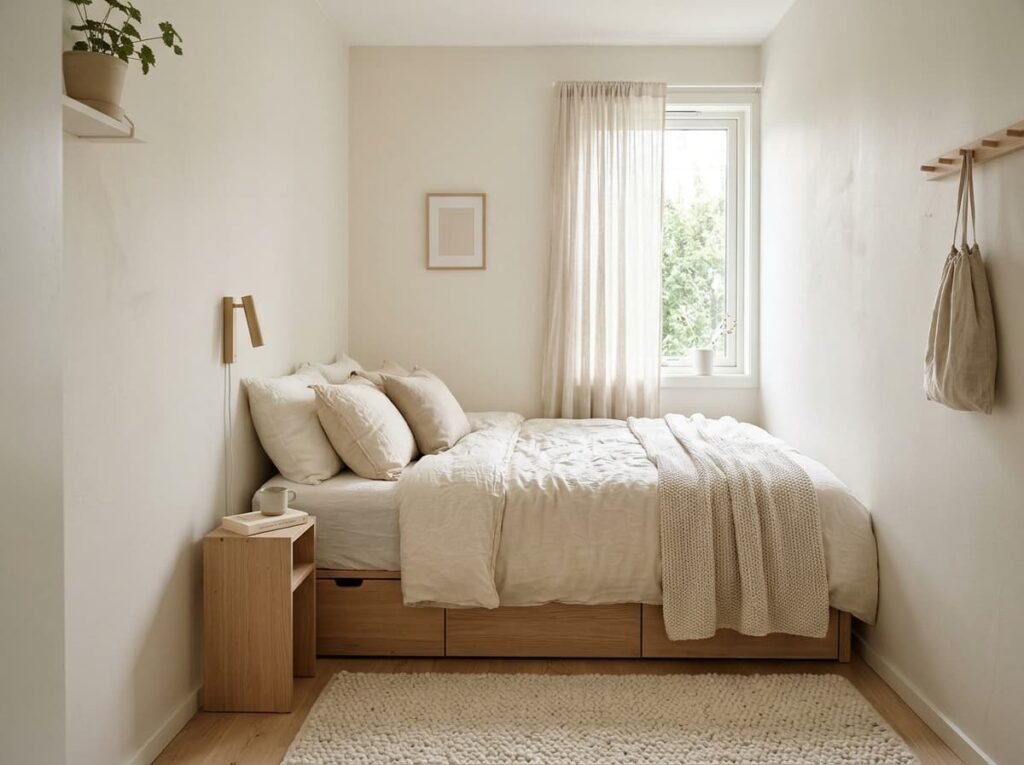
A small bedroom can feel especially inviting when the layout is simple and every item has a purpose. Choose a bed that fits the room comfortably, keep the walkway clear, and use compact bedside tables instead of bulky furniture. Soft bedding, warm lighting, and a limited color palette create a sense of cohesion. Pale walls and mirrors can help the space feel brighter, while textured fabrics add warmth without taking up extra floor area.
Use vertical space for practical storage and keep frequently used items within easy reach. Under-bed containers can hold spare bedding, while wall-mounted lights free up the bedside surface. Avoid filling every empty corner with furniture, because open space is important in a small room. A few meaningful accessories, such as a soft rug or a favorite cushion, will make the bedroom feel personal without appearing crowded. The best small-bedroom designs balance comfort with enough room to move around easily.
10. Add a Soft Area Rug
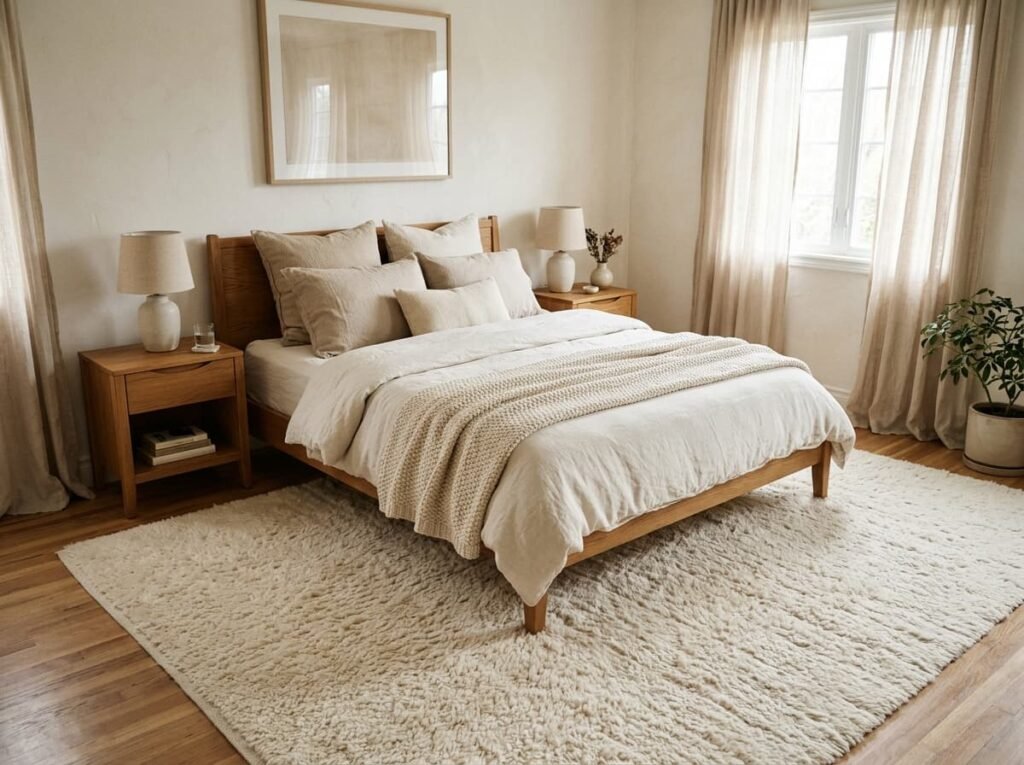
A soft area rug can make a bedroom feel more comfortable underfoot while visually connecting the furniture. Place a rug partly beneath the bed so it extends along the sides or foot, creating a soft landing when you get up in the morning. Wool, cotton, and plush-textured designs offer different levels of warmth, while neutral shades such as cream, sand, or light gray are easy to coordinate with most bedroom palettes.
Choose a size that suits the bed and the room rather than selecting a rug that looks too small beneath the furniture. A subtle pattern can add interest, but a plain textured rug may be better if the bedding already features strong prints. Make sure the rug lies flat and use a suitable nonslip backing where needed. This small addition can make the entire room feel more finished, especially when paired with layered bedding, warm lighting, and natural materials.
11. Style Your Bed With Extra Pillows
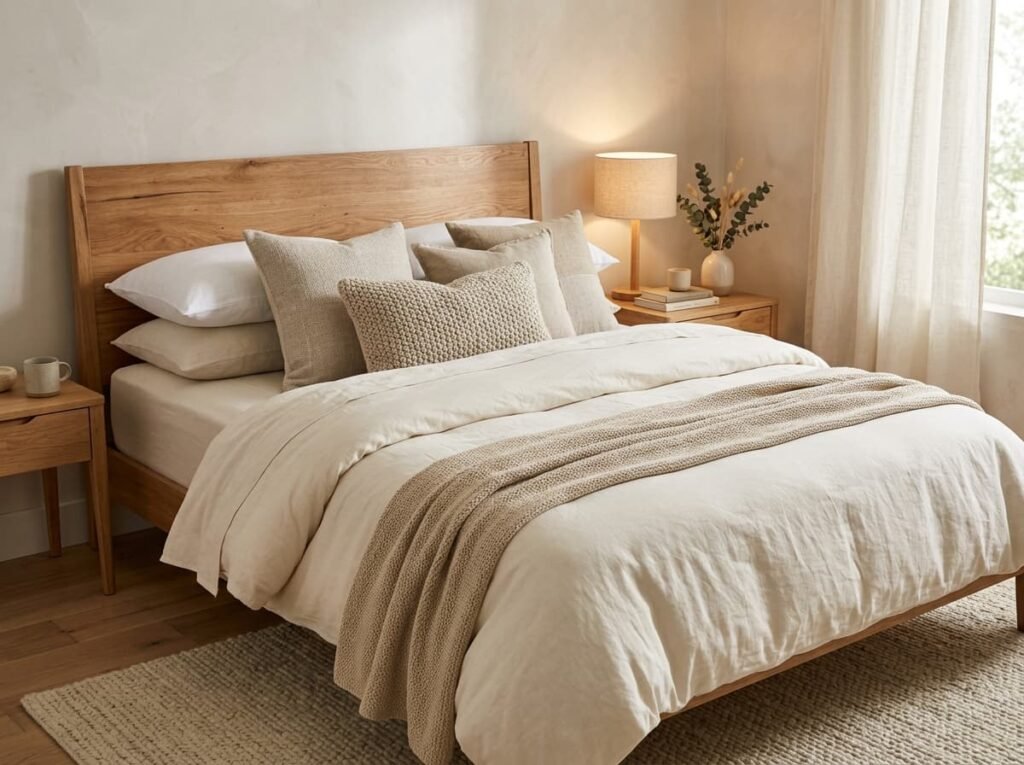
Extra pillows can make a bedroom feel welcoming and give the bed a more layered appearance. Begin with your regular sleeping pillows, then add a few decorative cushions in complementary colors and textures. A combination of cotton, linen, and soft knitted fabrics creates depth without requiring complicated patterns. Choose shades that relate to your duvet or curtains so the arrangement looks coordinated rather than like a collection of unrelated accessories.
Use a practical number of cushions that you can easily remove at bedtime and put back in the morning. Varying the sizes can make the bed look professionally styled, but too many pillows may create unnecessary work. A pair of accent cushions and one smaller textured pillow is often enough for a simple arrangement. This approach works with both neutral and colorful bedding, allowing you to refresh the bedroom’s appearance by changing only a few inexpensive accessories.
12. Try a Warm Terracotta Accent
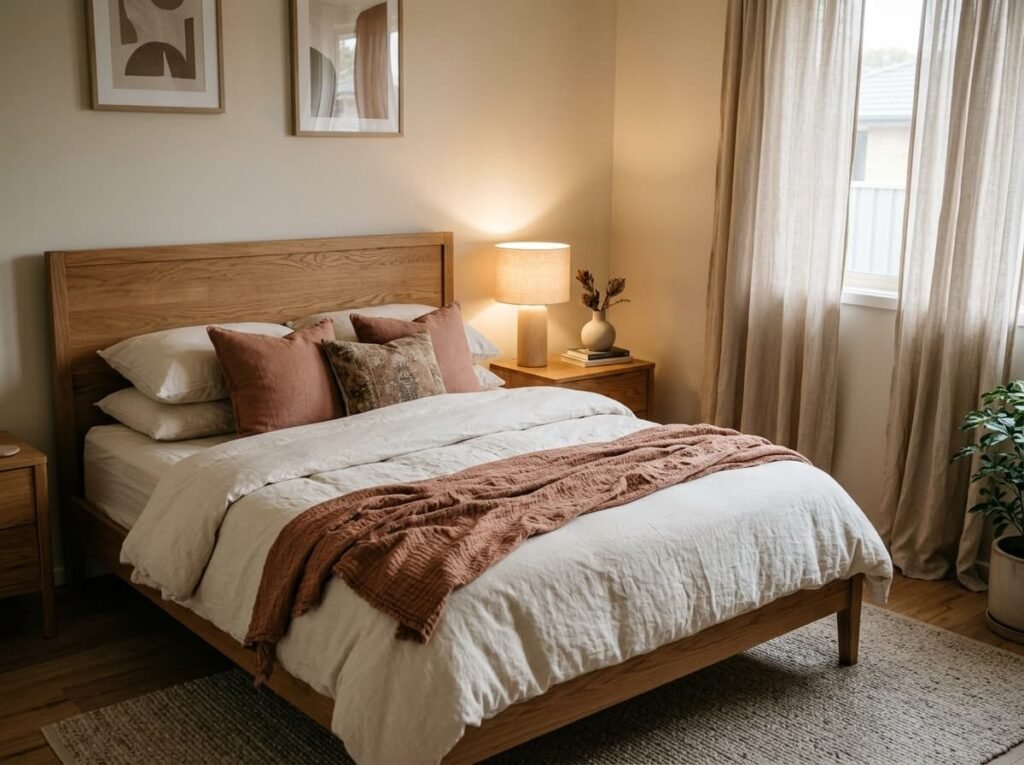
Terracotta adds earthy warmth to a bedroom without feeling as intense as a bright red or orange. Introduce it through a throw blanket, accent cushions, a ceramic vase, or a small artwork. The color pairs especially well with cream, warm beige, natural wood, and muted green. Used in moderation, terracotta can make a neutral bedroom feel more personal and inviting while maintaining a relaxed, natural appearance.
To create balance, let the larger surfaces remain light and use terracotta as a supporting color. A single throw across the bed or two matching cushions can be enough to establish the theme. Warm bedside lighting enhances the earthy undertones, while linen and cotton fabrics keep the look soft rather than heavy. This palette suits bohemian, modern rustic, and contemporary bedrooms, and it can be refreshed easily by switching the accent textiles when you want a different seasonal mood.
13. Create a Calm Bedroom With Minimal Decor
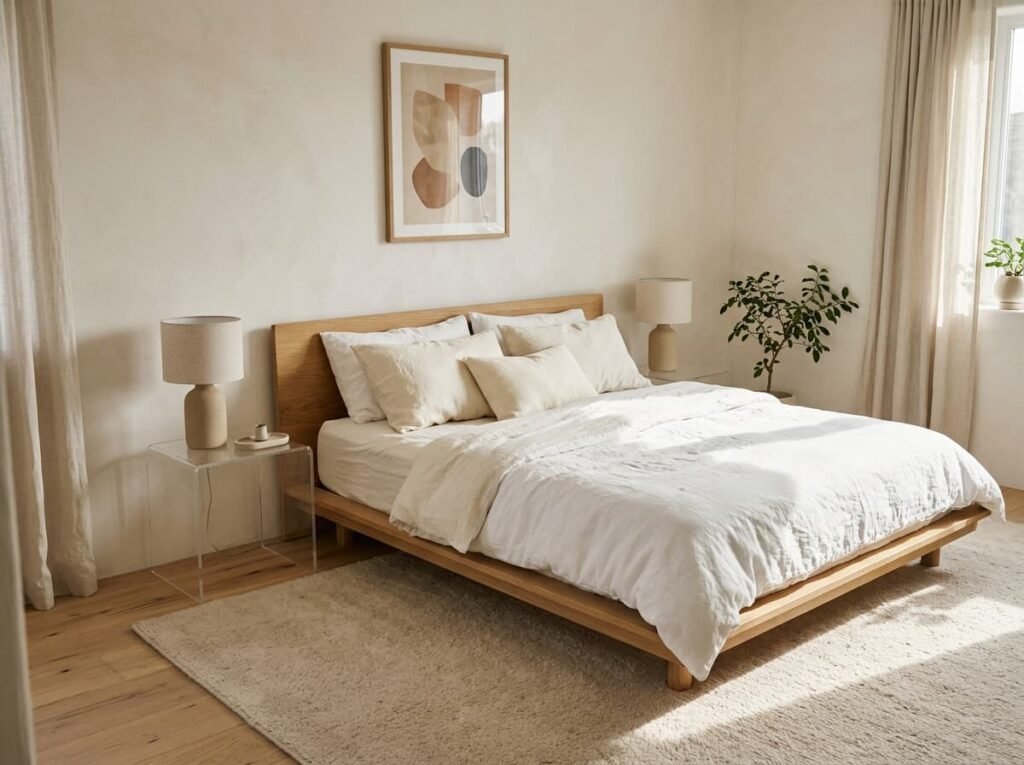
A calm bedroom does not need lots of decorations to feel complete. Start with comfortable bedding, a simple bed frame, and a few useful bedside accessories. Leave some surfaces clear so the room feels open and easy to maintain. Neutral colors, natural materials, and gentle lighting help create a restful atmosphere, while one meaningful artwork or a small vase can add personality without creating visual clutter.
Focus on quality and usefulness rather than the number of items you display. Choose a bedside lamp that provides comfortable light, a basket for spare blankets, or a simple tray for everyday essentials. If you have decorative pieces you love, display only a few at a time and rotate them occasionally. This approach is especially helpful for people who find busy rooms distracting. A thoughtfully edited bedroom can feel warm, personal, and inviting while remaining easy to clean and organize.
14. Use a Upholstered Headboard for Extra Comfort
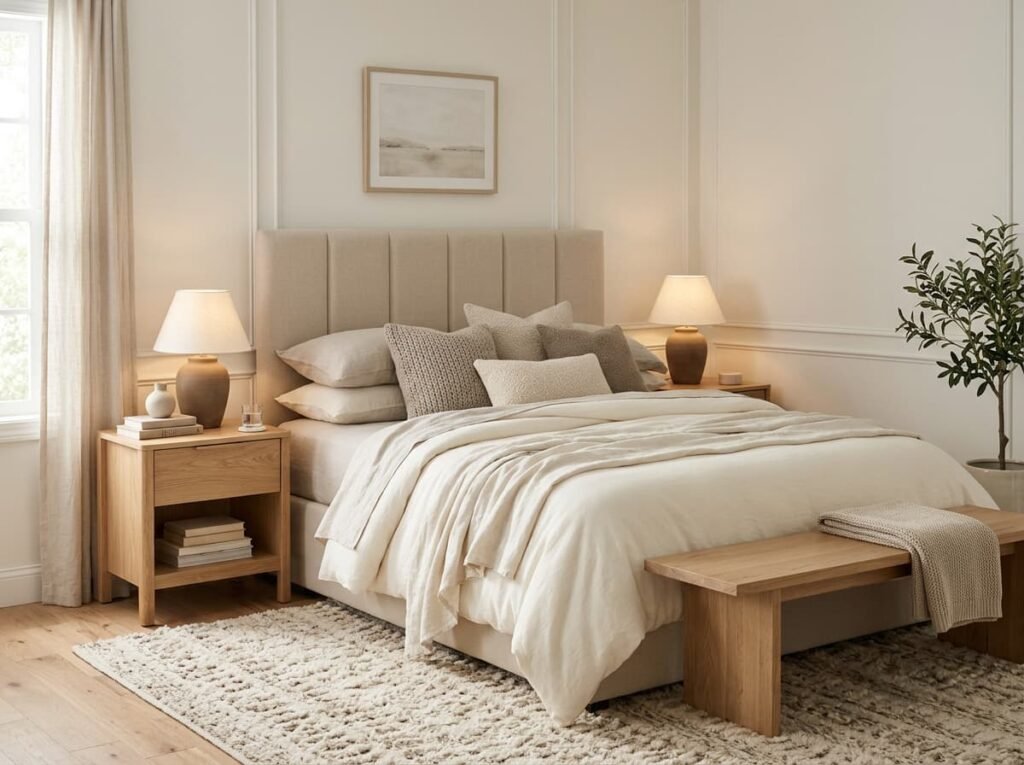
An upholstered headboard can make a bedroom feel softer and more comfortable, especially if you enjoy reading or relaxing in bed. Choose a fabric such as linen, cotton blend, or velvet in a color that complements your bedding. Beige, taupe, and warm gray are versatile options, while muted green or dusty blue can add a gentle accent. The padded surface also introduces texture, helping the bed feel like the main feature of the room.
Coordinate the headboard with simple bedside tables and soft lighting to keep the arrangement balanced. If the bedroom is small, a headboard in a light neutral shade may help the bed feel less visually heavy. Choose a fabric that suits your daily needs and can be cleaned according to the manufacturer’s instructions. This design works in contemporary, classic, and hotel-inspired bedrooms, adding comfort and a more finished appearance without requiring many extra decorations.
15. Decorate With Natural Plants
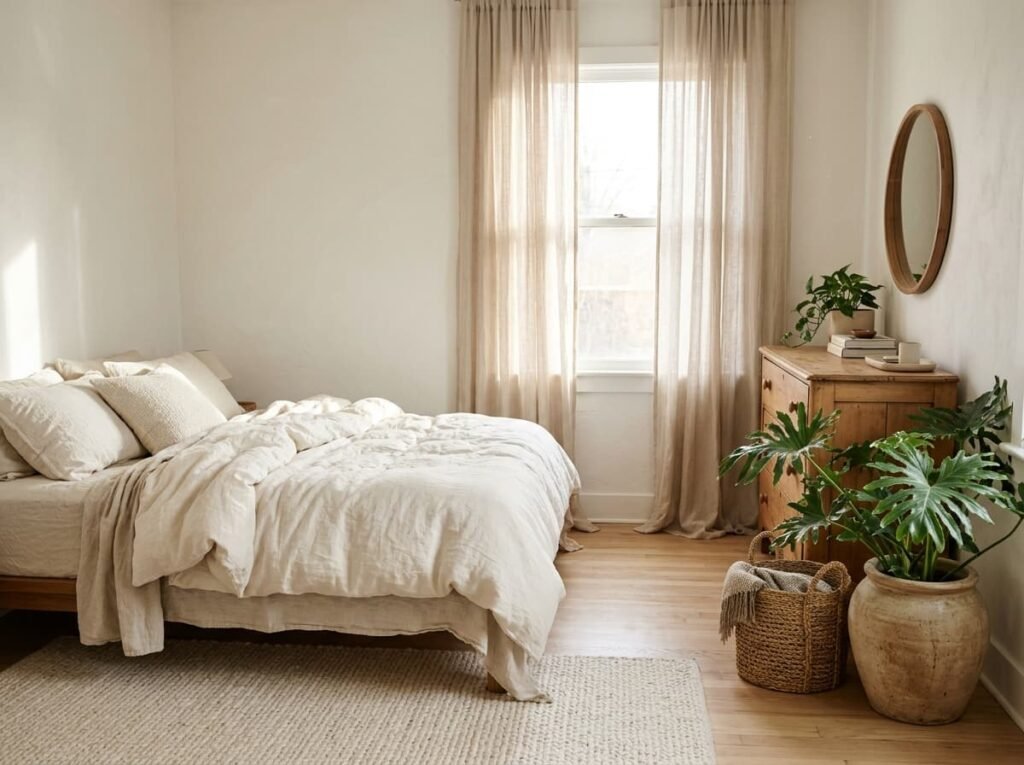
Natural plants can bring freshness and a gentle connection to the outdoors into a cozy bedroom. Choose a plant that suits the available light and the amount of care you can provide. A small plant on a dresser, a leafy floor plant in a corner, or a simple arrangement on a windowsill can add life without overwhelming the room. Pair greenery with natural wood, woven baskets, and neutral bedding for a relaxed and organic appearance.
Consider the plant’s mature size, watering needs, and suitability for your household before placing it near the bed. Keep pots on stable surfaces and protect furniture from excess moisture. If natural light is limited, select a plant suited to those conditions rather than choosing one purely for appearance. A simple ceramic or terracotta pot can complement the bedroom palette and add texture. This approach introduces natural color while preserving the calm, comfortable atmosphere that makes a bedroom feel inviting.
16. Add Wall Art Above the Bed

Wall art can give a cozy bedroom a personal focal point without taking up useful floor space. Choose a large abstract print, a peaceful landscape, or a small arrangement of complementary frames above the headboard. Warm neutrals, muted greens, and soft earthy tones tend to work well with relaxed bedroom palettes. The artwork should connect with the bedding or other accents so the room feels coordinated rather than visually divided.
Pay attention to scale and placement when hanging art above the bed. A piece that is too small may look disconnected, while an oversized arrangement can dominate the wall. Secure frames properly and avoid placing heavy objects where they could fall onto the sleeping area. If you prefer a softer look, choose natural wood frames or subtle canvas textures. Thoughtful wall art adds character and makes the bedroom feel more complete without requiring a major change to the furniture or layout.
17. Make a Cozy Farmhouse Bedroom

Farmhouse style brings a relaxed, lived-in feeling to a bedroom through natural materials and comfortable textures. Start with a wooden bed frame, white or cream bedding, and a soft quilt. Add a knitted throw, woven basket, and simple bedside lamps to create warmth without making the room feel crowded. Distressed wood finishes and linen fabrics introduce character, while a restrained color palette keeps the overall appearance peaceful.
Choose a few rustic accents that suit the room instead of decorating every surface. A wooden bench at the foot of the bed, a small ceramic vase, or a simple framed print can complete the look. Mix old-fashioned details with practical modern comforts so the bedroom remains functional for everyday use. This style is especially appealing for anyone who enjoys natural textures and a cozy country atmosphere. The result should feel comfortable, personal, and timeless rather than overly themed.
18. Use Black Accents for Cozy Contrast
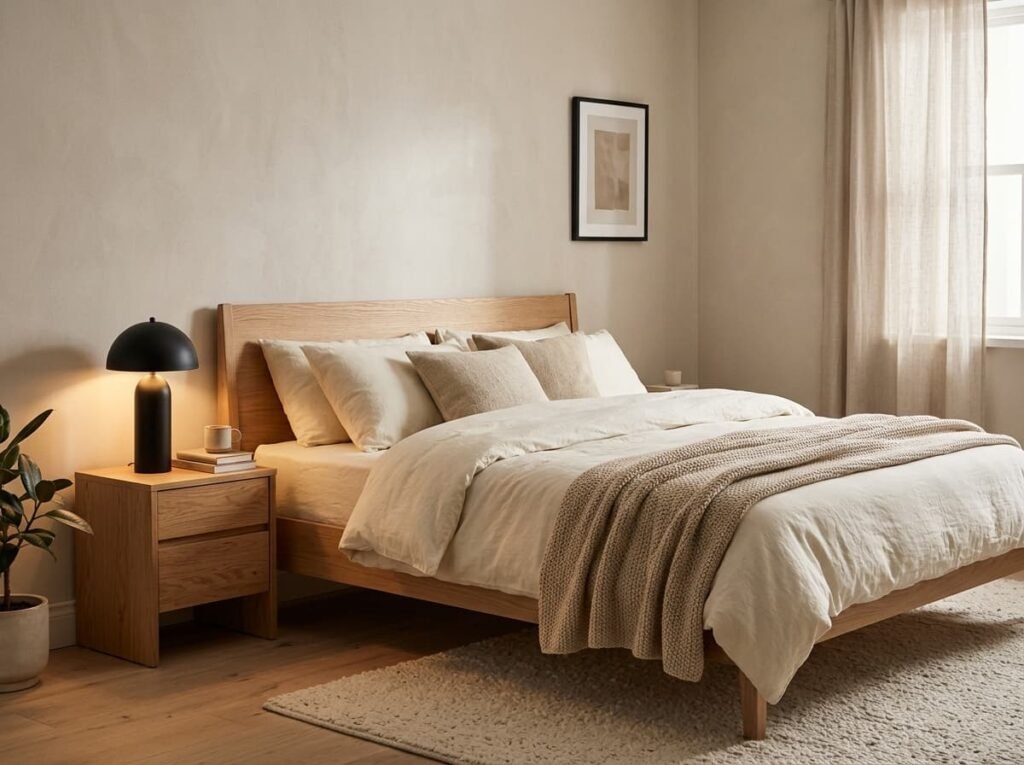
Black accents can add definition to a cozy bedroom without making the room feel dark. Introduce black through a bedside lamp, curtain rod, picture frame, or small decorative cushion. These details contrast with cream bedding and pale walls, helping the room feel more structured. Natural wood and warm lighting soften the contrast, creating a balanced look that feels contemporary while remaining comfortable and inviting.
Keep black accents limited to a few places so they guide the eye instead of dominating the room. For example, repeat black in a lamp and a frame while keeping the bed and curtains light. Textured fabrics such as linen and chunky knits add softness, preventing the palette from appearing too sharp. This approach works well in modern, Scandinavian, and industrial-inspired bedrooms. It is also easy to update because the contrast comes from small accessories rather than permanent changes to the room.
19. Create a Bedside Styling Arrangement
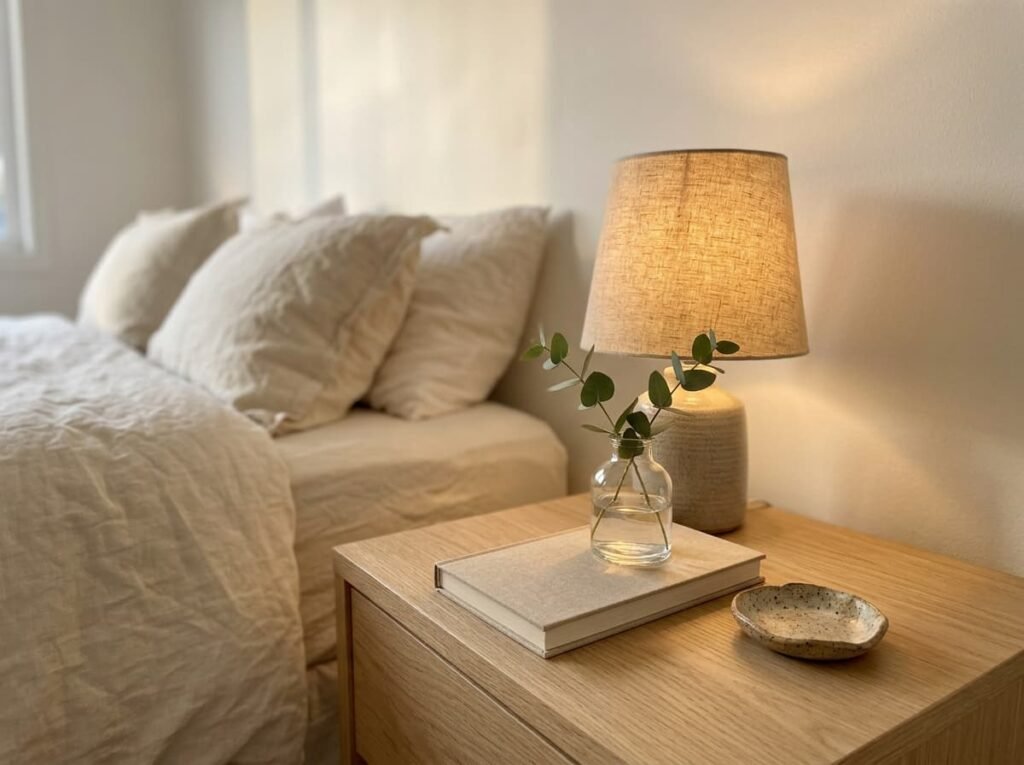
A well-styled bedside table can make a bedroom feel more thoughtful and organized. Begin with a lamp that provides useful light, then add one or two small accessories such as a ceramic dish, a book, or a simple vase. Leave enough room for essentials like a phone or a glass of water. A coordinated arrangement helps the bedside area feel complete without creating clutter that makes everyday use inconvenient.
Choose accessories that relate to the rest of the room, whether through color, material, or shape. A wooden nightstand pairs naturally with ceramic and linen details, while a painted table may suit metallic or glass accents. Keep cords tidy and avoid placing unstable objects near the edge. You do not need expensive decorations to create an attractive result; a few useful pieces arranged with care are often enough. This small detail can reinforce the cozy atmosphere of the entire bedroom.
20. Choose Soft Blue for a Peaceful Bedroom

Soft blue can create a peaceful bedroom atmosphere while adding more color than a neutral palette. Consider dusty blue bedding, pale blue cushions, or a muted blue accent wall. These shades pair well with warm white, beige, and natural wood, producing a balanced combination that feels calm rather than cold. Textured blankets and warm bedside lighting help soften the color, making the room comfortable for both daytime relaxation and evening rest.
For a cohesive result, choose one main blue shade and repeat it in a few places instead of using several unrelated tones. Cream curtains and light wood furniture can balance cooler blue surfaces, while a small woven accessory introduces natural texture. If you are unsure about committing to a painted wall, start with pillowcases or a throw that can easily be changed. Soft blue works particularly well in coastal, Scandinavian, and contemporary bedrooms where the goal is a restful, uncluttered look.
21. Add a Bench at the Foot of the Bed

A bench at the foot of the bed can make a bedroom feel finished while providing a useful place to sit or arrange extra blankets. Choose an upholstered bench for a soft, comfortable appearance or a wooden design for a more rustic look. The bench should be proportionate to the bed and leave enough space to walk around comfortably. A neutral finish makes it easy to coordinate with bedding and other furniture.
Use the bench for a neatly folded throw, a decorative cushion, or clothing you plan to wear the next day. Avoid turning it into a permanent storage pile, as that can make the room feel less relaxing. In smaller bedrooms, a narrow bench or one with hidden storage can provide extra function without taking up too much room. This simple addition helps create a layered, thoughtfully arranged bedroom while keeping everyday routines convenient.
22. Use Soft, Textured Bedding in One Color

Monochromatic bedding can make a bedroom feel calm and coordinated without appearing plain. Choose one main color, such as cream, beige, soft gray, or muted sage, and combine several textures within that shade. Cotton sheets, a quilted coverlet, knitted cushions, and a woven throw create visual depth even when the colors remain similar. This approach works particularly well when you want the bed to feel luxurious while keeping the rest of the room simple.
Pay attention to the undertones of your chosen color so the layers work well together. Warm beige and cream create a welcoming atmosphere, while soft gray and white can feel cooler and more contemporary. Introduce subtle contrast through the headboard or bedside furniture rather than adding many new colors. The result is easy to coordinate and can be refreshed seasonally by swapping one throw or cushion. Textured monochromatic bedding offers a simple way to create a polished, comfortable bedroom.
23. Make the Bedroom Cozy With a Canopy

A canopy can give a bedroom a soft, romantic feeling by framing the bed and creating a more intimate focal point. Choose a simple metal or wooden canopy frame, or use a properly secured curtain system designed for this purpose. Light fabric in white, cream, or pale beige keeps the design airy, while layered bedding and warm lighting reinforce the cozy atmosphere. The effect can be subtle and elegant rather than dramatic.
Before adding fabric overhead, ensure the frame and mounting hardware are suitable and secure. Keep fabric away from heat sources, lights that become hot, and ceiling fans. In a small room, use lightweight materials and a simple frame so the bed does not feel visually overwhelming. Coordinate the canopy fabric with the curtains or bedding for a unified look. This idea works especially well in bedrooms where the bed is the main focal point and you want to add softness without introducing many extra decorative items.
24. Keep the Bedroom Personal and Inviting
The most inviting bedrooms reflect the people who use them. Include a few meaningful objects, favorite colors, or personal touches that make the space feel familiar and comfortable. A framed photograph, a treasured decorative item, or a small collection of books can add personality without requiring a major design change. Combine these details with comfortable bedding, useful storage, and gentle lighting to keep the room attractive as well as practical.
Try to display personal items selectively so the bedroom remains a place to relax rather than another busy storage area. Rotate decorative pieces when you want a fresh look, and keep the items you use daily within easy reach. A favorite throw or a meaningful piece of artwork can make more difference than a large collection of generic accessories. When comfort, personal style, and functionality work together, the bedroom becomes a warm retreat that feels genuinely yours.
Conclusion
Creating a cozy bedroom does not require expensive furniture or a complete renovation. Soft bedding, warm lighting, natural wood, calming colors, and a few personal accessories can transform the way your space looks and feels. Start with one or two changes that suit your budget, then build on them as needed. Whether you prefer modern minimalism, farmhouse charm, or layered neutral textures, these 24 cozy bedroom ideas can help you create a warm and inviting retreat you’ll enjoy every day.