
Introduction
Contemporary living room design combines modern comfort, clean lines, practical furniture, and thoughtful decoration. Unlike styles that follow one fixed historical period, contemporary interiors evolve with changing tastes, materials, and lifestyles. They can feel minimalist and sophisticated or warm, layered, and inviting, depending on your preferences.
Whether you are decorating a small apartment or refreshing a spacious family home, the right colors, textures, lighting, and furniture can transform your space. Explore these 21 contemporary living room design ideas for inspiration and discover practical ways to create a stylish, comfortable room that reflects your personality.
1. Warm Neutral Living Room Design
Warm neutral colors create a contemporary living room that feels peaceful, welcoming, and timeless. Combine shades of cream, beige, oatmeal, and soft taupe across the walls, sofa, curtains, and rugs. Introduce natural wood furniture to prevent the palette from looking flat. A few darker accents, such as charcoal cushions or black metal frames, provide definition without overpowering the room. Keep larger surfaces simple, allowing subtle differences in color and texture to create visual interest.
Layering is essential when decorating with neutrals because similar shades can otherwise make a room feel unfinished. Choose a textured rug, linen curtains, boucle cushions, and a knitted throw to add depth. Warm white lighting helps the colors appear comfortable rather than stark. Consider a large indoor plant or a simple ceramic vase for contrast. This approach works especially well in apartments, open-plan homes, and living rooms where a calm, uncluttered atmosphere is the main priority.
2. Minimalist Furniture With Clean Lines
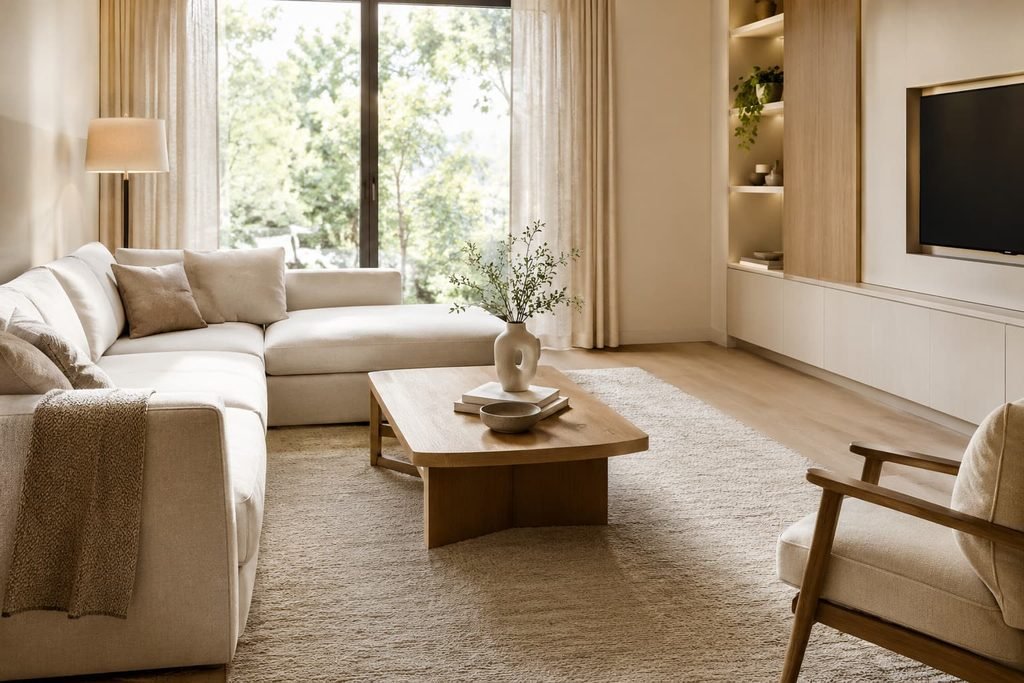
Minimalist furniture gives a contemporary living room a spacious, organized appearance. Choose a sofa with a simple silhouette, a streamlined coffee table, and storage units with discreet handles. Furniture with slim legs can create a lighter visual effect, particularly in smaller rooms. Stick to a coordinated palette and avoid filling every empty corner. Instead, let each carefully selected piece contribute to comfort, function, or visual balance. The result feels intentional rather than bare, with enough room to move comfortably.
To make minimalist furniture inviting, combine practical shapes with soft materials and subtle decoration. A comfortable upholstered sofa, a wool rug, and a few textured cushions can soften straight edges. Choose one or two decorative objects rather than displaying numerous small accessories. Wall-mounted shelving can provide storage without occupying valuable floor space. Before purchasing furniture, measure the room and leave clear walking routes between pieces. This simple planning step helps create a modern living room that looks elegant and functions well every day.
3. Contemporary Living Room With Natural Wood
Natural wood introduces warmth and organic character into contemporary living rooms. Consider oak coffee tables, walnut sideboards, wooden shelving, or a light timber media console. These materials pair beautifully with cream upholstery, warm gray walls, and muted green accents. Choose one dominant wood tone and repeat it in smaller details for a coordinated appearance. The grain provides natural pattern, reducing the need for excessive decoration. Even a single wooden furniture piece can make a modern interior feel more welcoming.
Balance wooden surfaces with contrasting materials so the room does not become visually heavy. A pale rug, linen curtains, or a stone-look tabletop can provide a refreshing counterpoint to darker timber. In compact rooms, lighter woods often help maintain an open appearance, while deeper walnut shades add richness to larger spaces. Keep finishes consistent where possible, but avoid matching every piece exactly. The goal is a layered interior where wood, fabric, metal, and natural light work together harmoniously.
4. Statement Lighting as a Design Feature
Statement lighting can become the focal point of a contemporary living room while improving everyday comfort. Consider a sculptural pendant, an oversized floor lamp, or a modern chandelier with a distinctive silhouette. Choose a fixture that complements the furniture and room proportions instead of competing with them. Black metal, brushed brass, frosted glass, and softly curved forms can all suit contemporary interiors. A carefully chosen light adds personality even when the rest of the decoration remains relatively simple.
For a balanced lighting plan, combine general illumination with task and accent lighting. Ceiling fixtures provide overall brightness, floor lamps make reading easier, and table lamps create a softer evening atmosphere. Dimmable bulbs allow the room to adapt to different activities throughout the day. Position lamps to avoid glare on television screens, and consider the warmth of the light before choosing bulbs. Thoughtful lighting highlights textures, supports daily routines, and makes contemporary living rooms feel comfortable after sunset.
5. Earthy Colors for a Cozy Modern Interior
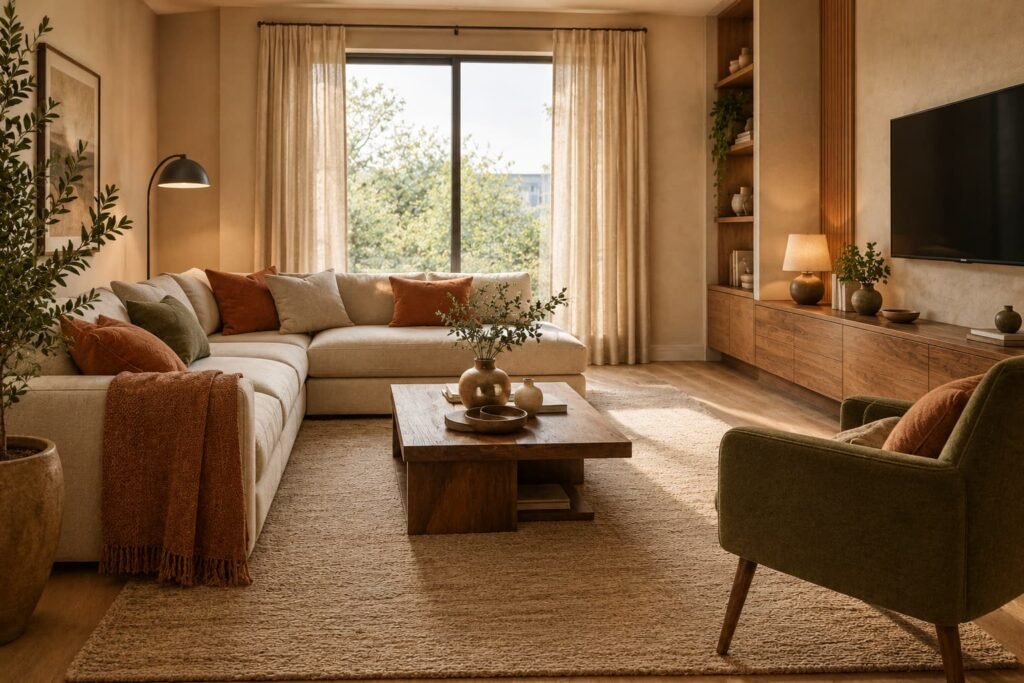
Earthy colors bring a relaxed, grounded feeling to contemporary living rooms. Terracotta, olive green, muted clay, sand, and warm brown can create a natural palette without making the space feel old-fashioned. Start with a neutral foundation and introduce earthy tones through cushions, accent chairs, artwork, or a painted feature wall. These colors work particularly well alongside wood, stone, woven fibers, and soft upholstery. Their understated character creates a room that feels connected to nature while remaining modern.
Use different intensities to keep the palette visually balanced. For example, pair pale sand walls with olive cushions and a rust-colored throw, then add dark wood or black details for contrast. If you prefer subtle decoration, choose earthy shades for textiles rather than permanent finishes. Natural daylight can change how these colors appear, so test paint samples at different times before committing. Repeating two or three related tones throughout the room creates cohesion without making every surface look identical.
6. Curved Sofas and Rounded Furniture
Curved sofas and rounded furniture introduce softness into contemporary interiors dominated by straight architectural lines. A gently curved sofa, circular coffee table, or rounded accent chair can create a welcoming seating arrangement. These forms help a living room feel more relaxed and sculptural without requiring complicated decoration. Choose upholstery in cream, beige, muted green, or another color that complements the existing palette. Rounded furniture can work in spacious rooms, but compact curved pieces may also soften smaller apartments.
When arranging curved furniture, pay attention to circulation and the room’s overall proportions. Leave enough space around the sofa for comfortable movement, and select a coffee table that remains easy to reach from the seating. A circular rug can reinforce the shape, while straight shelving or rectangular artwork provides contrast. Avoid filling the room with too many rounded pieces, as repetition can make the design feel overly themed. A few carefully chosen curves are usually enough to create a contemporary, inviting atmosphere.
7. A Contemporary Living Room With a Fireplace
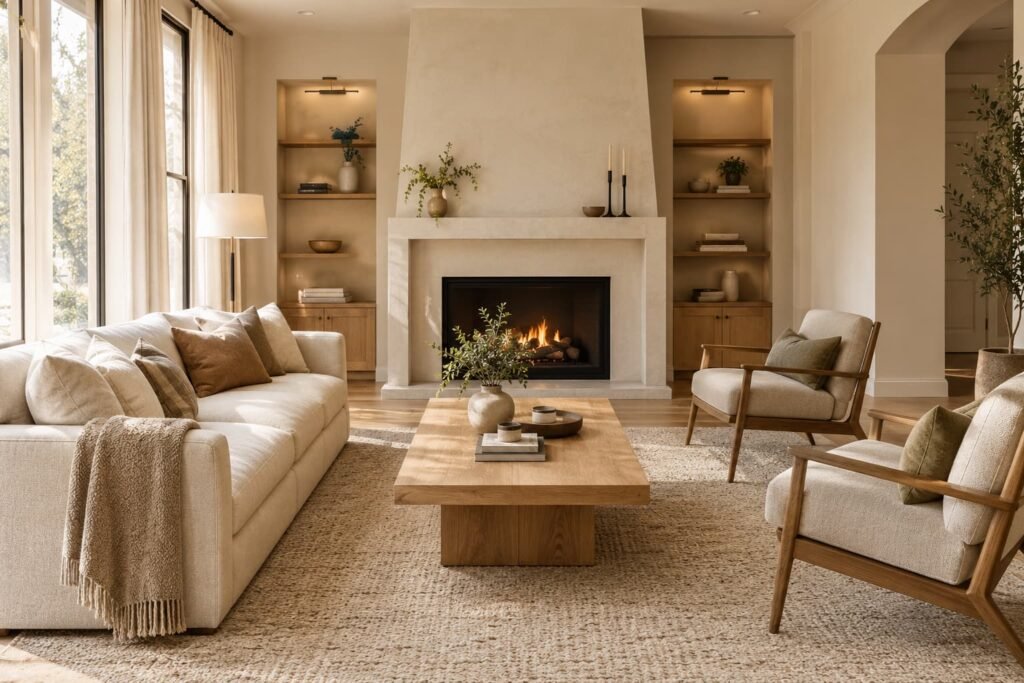
A fireplace can anchor a contemporary living room and provide a natural gathering point. Choose a simple surround in stone, plaster, or a smooth neutral finish to maintain a clean appearance. Arrange the sofa and accent chairs to encourage conversation while preserving clear walking paths. A restrained color palette helps the fireplace stand out without overwhelming the room. If the fireplace is already decorative rather than functional, treat it as an architectural feature and style the surrounding area with thoughtful simplicity.
Keep the mantel uncluttered with a few carefully selected accessories, such as a ceramic vase or a low sculptural object. Large artwork or a simple mirror can create height, provided it is suitable for the fireplace’s heat and installation requirements. Use layered lighting to make the seating area comfortable after dark. In rooms without a traditional fireplace, an appropriately installed electric model may offer a similar focal point. Always follow manufacturer guidance and local safety requirements for any heating appliance.
8. Modern Open-Plan Living Room Layout
An open-plan living room connects different activities while preserving a spacious, flowing atmosphere. Instead of relying on walls to separate areas, use furniture placement, rugs, lighting, and consistent materials to define each zone. A sofa can mark the living area, while a dining table establishes a separate gathering space. Keep the main walking routes unobstructed and repeat selected colors across the connected areas. This approach creates visual unity while allowing each part of the room to serve a different purpose.
Choose furniture that suits the scale of the overall space, not just one corner. A large rug can anchor the seating arrangement, while pendant lighting helps distinguish the dining zone. Low shelving or a console behind the sofa can provide subtle separation without blocking natural light. Maintain a consistent flooring finish where practical, and avoid introducing too many unrelated colors or materials. In smaller open-plan homes, multifunctional furniture and careful storage make the space easier to use without sacrificing its contemporary character.
9. Textured Walls for Subtle Visual Interest
Textured walls add dimension to contemporary living rooms without relying on busy patterns or excessive decoration. Options include limewash-style finishes, subtle plaster effects, wood slats, or restrained wall panels. A textured surface behind the sofa or television can establish a focal point while keeping the rest of the room simple. Choose a finish that complements the existing materials and color palette. Soft beige, warm white, muted gray, and earthy shades are versatile choices for creating a refined, contemporary backdrop.
Consider how lighting will interact with the wall before selecting a finish. Side lighting can emphasize plaster texture, while indirect illumination can create a gentle wash across a feature surface. Keep nearby accessories relatively understated so the wall remains the main visual feature. If you rent your home or have a limited budget, removable wall treatments or carefully selected textured artwork may offer a more flexible alternative. Test samples in your actual room because surface texture and color can look different under daylight and artificial lighting.
10. Contemporary Living Room With Black Accents
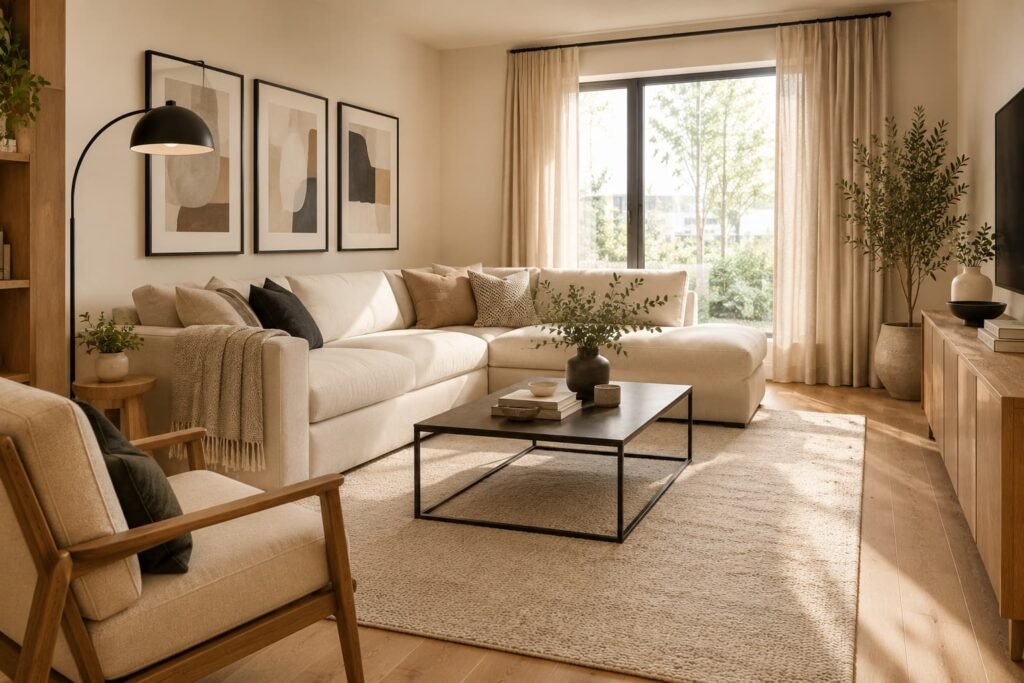
Black accents can give a contemporary living room definition and contrast without requiring a dramatic color scheme. Introduce black through slim lamp frames, picture frames, cabinet handles, side tables, or a metal coffee table base. These details look especially effective against warm white walls, beige upholstery, and natural wood. Rather than covering large areas in black, use it selectively to guide the eye around the room. A few repeated accents can make the overall design feel deliberate and visually connected.
Balance darker details with sufficient light surfaces and comfortable textures. A pale rug, sheer curtains, and soft cushions prevent black furniture from dominating the room. If you prefer a stronger statement, consider a black accent chair or a narrow feature wall, provided the space receives enough light. Repeat black in two or three locations instead of scattering unrelated dark objects everywhere. This measured approach works across minimalist, industrial, and contemporary interiors, adding structure while preserving an open and inviting atmosphere.
11. A Cozy Contemporary Reading Corner
A dedicated reading corner adds function and personality to a contemporary living room. Choose a comfortable armchair with supportive seating, a small side table, and a lamp that directs light onto the reading area. Position the chair near a window when possible, making use of natural daylight without blocking curtains or pathways. A soft throw, textured cushion, and small rug can visually distinguish the corner from the main seating arrangement while keeping the design consistent with the rest of the room.
Use a nearby bookcase, floating shelf, or basket to keep reading materials organized. Choose accessories that are useful rather than filling the corner with decorative objects that collect clutter. Warm lighting creates a relaxing evening environment, while an adjustable lamp offers more practical illumination for reading. In a small apartment, place the chair beside the sofa or use a compact accent seat. A well-planned reading corner demonstrates how contemporary living room design can combine attractive styling with meaningful everyday function.
12. Contemporary Living Room With Greenery
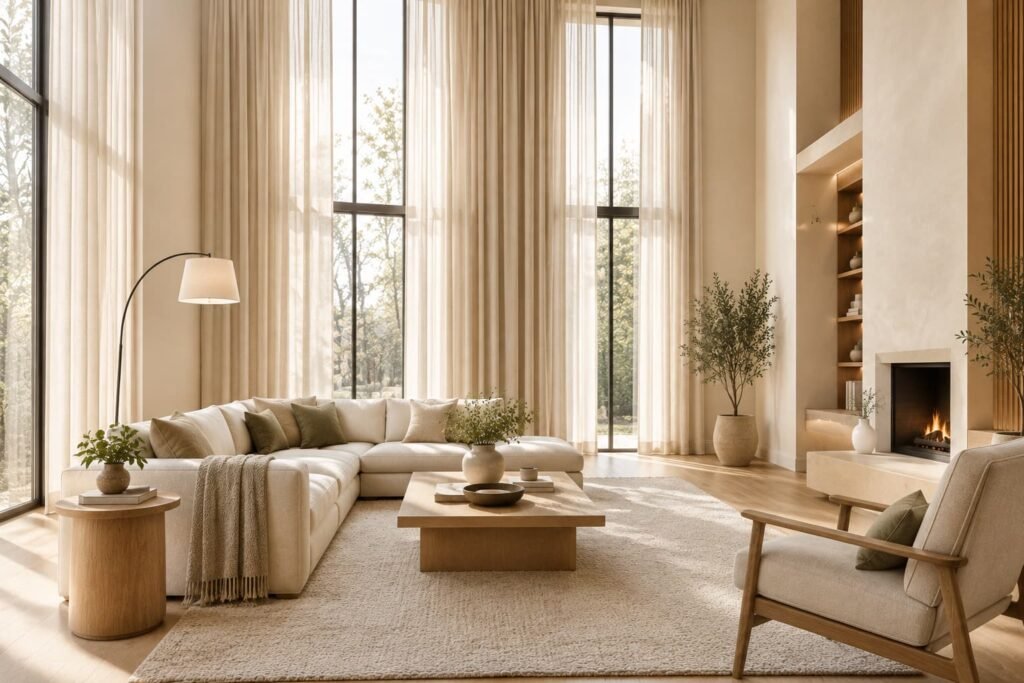
Indoor plants bring color, texture, and a natural element into contemporary living rooms. A tall plant can fill an empty corner, while smaller plants add interest to shelves, side tables, or windowsills. Choose containers that complement the room, such as matte ceramic pots, woven baskets, or simple stone-look planters. Green foliage works especially well with warm neutrals, natural timber, and earthy accents. Even a modest arrangement can soften clean architectural lines and make the space feel more connected to nature.
Select plants according to available daylight, temperature, and the time you can devote to care. Grouping plants of different heights creates a more intentional arrangement than scattering small pots randomly. Keep larger leaves away from narrow walkways and ensure containers are stable around children or pets. If living plants are impractical, a few high-quality artificial plants can provide a similar decorative effect. Use greenery as an accent rather than overcrowding every surface, allowing the furniture, lighting, and room layout to remain visible.
13. Contemporary Living Room With a Sculptural Coffee Table
A sculptural coffee table can serve as functional furniture and a design feature at the same time. Look for interesting proportions, rounded edges, pedestal bases, or distinctive combinations of wood and stone. A table in a simple neutral color can complement bold furniture, while a darker or more unusual shape may become the centerpiece of a restrained room. Consider the sofa height and available floor space before choosing a design. The best option should look attractive while remaining practical for everyday use.
Style the tabletop with a small tray, one or two books, or a simple ceramic object, leaving enough room for drinks and daily activities. Avoid filling every available surface with accessories because the table’s shape should remain visible. In a small living room, a nesting set or compact rounded design can offer flexibility. If the table is visually substantial, keep nearby furniture relatively understated. This creates a balanced arrangement where one distinctive piece adds personality without making the room feel crowded.
14. Layered Rugs for a Designer Look
Layered rugs can introduce texture, color, and dimension into a contemporary living room. One approach is to place a larger, understated natural-fiber rug beneath a smaller patterned or textured rug. Another is to combine two rugs with complementary colors and different pile heights. This technique can help define the seating zone in an open-plan room and make the floor feel more inviting. Choose materials that suit your lifestyle, particularly if the living room receives heavy daily use or frequent visitors.
For a coordinated result, keep at least one visual element consistent between the rugs, such as color, pattern, or texture. Make sure the larger rug anchors the main furniture arrangement and that the smaller rug does not obstruct doors or create tripping hazards. Use suitable rug pads to improve stability on smooth flooring. If your room already includes patterned upholstery or strong artwork, simpler rugs may be more effective. Layering works best when it adds depth while maintaining a clear and organized overall appearance.
15. Contemporary Living Room With Floor-to-Ceiling Curtains
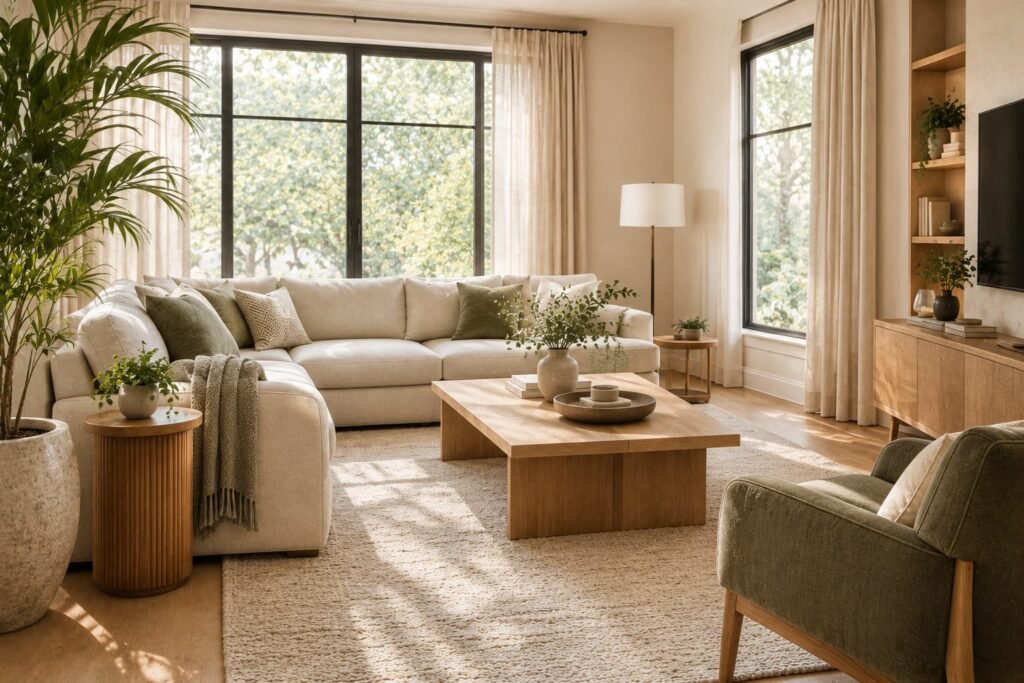
Floor-to-ceiling curtains can make a contemporary living room appear taller and more polished. Mounting the curtain rod closer to the ceiling and allowing the fabric to reach the floor draws attention upward. Linen-look materials, soft sheers, and textured neutral fabrics work well with modern furniture. Choose a color that coordinates with the walls for a subtle effect, or introduce a slightly deeper shade to frame the windows. The right curtains soften hard surfaces while providing privacy and control over daylight.
Consider the amount of natural light, window orientation, and privacy needed when selecting curtain fabric. Sheer panels allow daylight to filter through, while lined curtains offer greater coverage and can help manage unwanted brightness. Ensure the fabric hangs neatly without dragging excessively or blocking heating equipment. In a small living room, colors close to the wall tone can create a calmer visual effect. For a layered look, combine sheers with heavier side panels, keeping the hardware and folds simple for a contemporary finish.
16. A Contemporary Gallery Wall
A gallery wall allows personal style to become part of contemporary living room design. Combine framed photographs, abstract prints, line drawings, or typography that you have the right to display. A consistent frame finish can unify different images, while varied sizes create movement across the wall. Choose artwork that complements the room’s palette rather than matching every cushion and accessory exactly. A gallery wall above the sofa can create a focal point, especially when the surrounding furniture and decoration remain relatively simple.
Before hanging anything, arrange the frames on the floor to test spacing, proportions, and visual balance. Keep the overall grouping connected to the furniture below, rather than spreading small frames too far apart. For a more relaxed look, mix a few frame sizes while maintaining a shared color theme. Always check the usage rights for images you print or reproduce, particularly when using commercial artwork. If you prefer a quieter interior, one large artwork or a pair of coordinated prints may achieve a similar effect.
17. Contemporary Living Room With a Soft Pastel Palette
Soft pastel colors can make contemporary living rooms feel fresh without becoming overly playful. Consider dusty pink, pale sage, muted blue, or soft lavender paired with warm white and natural wood. Introduce these shades through cushions, an accent chair, a rug, or carefully selected artwork. Keeping the larger furniture pieces neutral makes the palette easier to update over time. Pastels work particularly well when the colors are slightly muted, creating a gentle atmosphere that feels sophisticated rather than overly bright.
Choose two or three related shades instead of using every pastel color in one room. For example, pale sage and dusty pink can work together when supported by cream upholstery and warm wood. Test fabric samples in natural and artificial light, because delicate colors may change appearance throughout the day. Metallic accents, such as brushed brass, can add warmth, while black details provide definition. This approach offers a lighter alternative to earthy palettes while retaining the clean lines and practical layout of contemporary interiors.
18. Smart Storage for a Clutter-Free Living Room
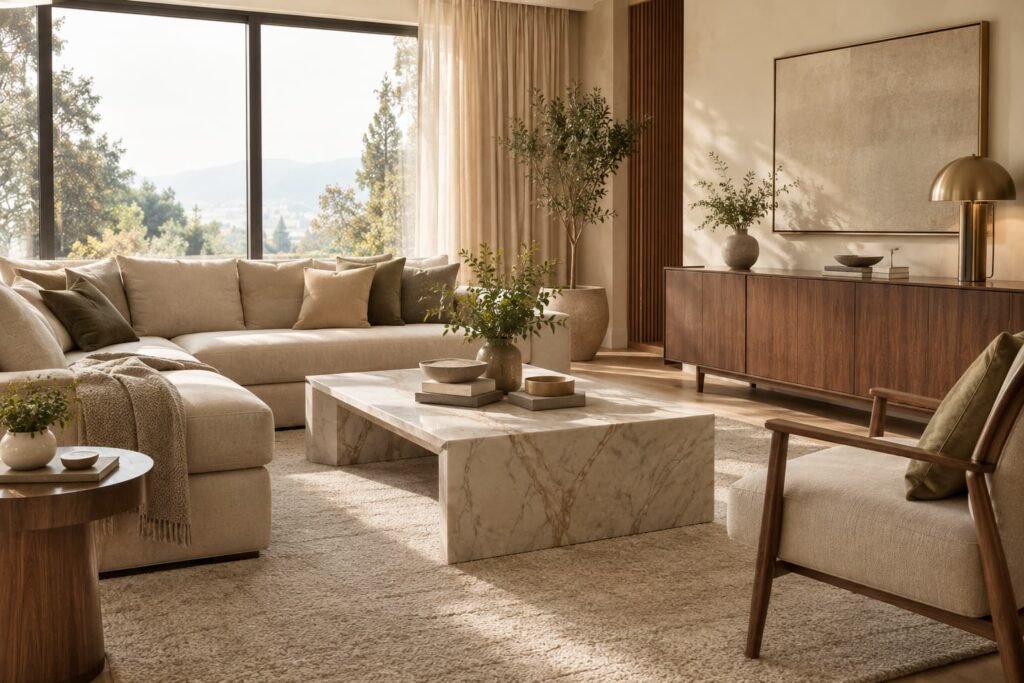
Smart storage helps a contemporary living room remain organized without sacrificing style. Consider media units with closed cabinets, coffee tables with hidden compartments, storage ottomans, or built-in shelving that uses vertical space. Closed storage is useful for remotes, cables, games, and everyday items that can make a room appear messy. Open shelves can display books and a few decorative objects, but leaving some space empty helps maintain a clean, balanced appearance. Choose storage finishes that complement the main furniture.
Start by identifying what needs to be stored before purchasing cabinets or organizers. Measure the available space and check that doors, drawers, and cabinet panels can open comfortably. In smaller rooms, wall-mounted units may free up floor area and create a lighter visual effect. Baskets can keep loose items accessible, while cable management improves the appearance of entertainment areas. Avoid buying storage simply to fill empty walls. A thoughtful system should make daily routines easier and support the room’s overall design rather than becoming another source of clutter.
19. Contemporary Living Room With Stone and Marble Details
Stone and marble details can add a refined, tactile quality to contemporary living rooms. Consider a marble-look coffee table, a stone side table, a textured stone fireplace surround, or accessories with natural mineral patterns. These materials pair well with simple upholstery, warm wood, and understated metal finishes. You do not need to cover large surfaces to achieve the effect; one carefully chosen piece can introduce enough visual interest. Neutral stone colors are versatile, while darker veining creates a more dramatic focal point.
Balance stone’s visual weight with softer materials such as linen, wool, boucle, or cotton. A textured rug and upholstered seating prevent the room from feeling too hard or formal. If natural marble is beyond your budget, consider a well-made marble-look surface that suits your practical needs. Always check cleaning and maintenance requirements before choosing a material for a frequently used coffee table. By mixing tactile surfaces thoughtfully, you can create a contemporary living room that feels sophisticated, comfortable, and suitable for everyday family life.
20. Contemporary Living Room With a Bold Accent Chair
A bold accent chair introduces personality without requiring a complete room makeover. Choose a distinctive silhouette, an interesting upholstery texture, or a color that contrasts with the main sofa. Deep green, burnt orange, navy, or muted mustard can work well against a neutral backdrop. Position the chair where it contributes to conversation and does not obstruct the main walking route. This single statement piece can add character to a contemporary living room while allowing the remaining furniture to stay simple.
Connect the chair to the rest of the room through a small repeated detail, such as a cushion, artwork color, or decorative object. Avoid matching everything exactly; a subtle relationship usually looks more natural. Check the chair’s dimensions, comfort, and upholstery durability before buying, especially if it will receive frequent use. In a small room, a visually light frame or compact design may be more practical than an oversized armchair. The aim is to create a useful seating option that also gives the interior a distinctive focal point.
21. Contemporary Living Room With Warm Ambient Lighting
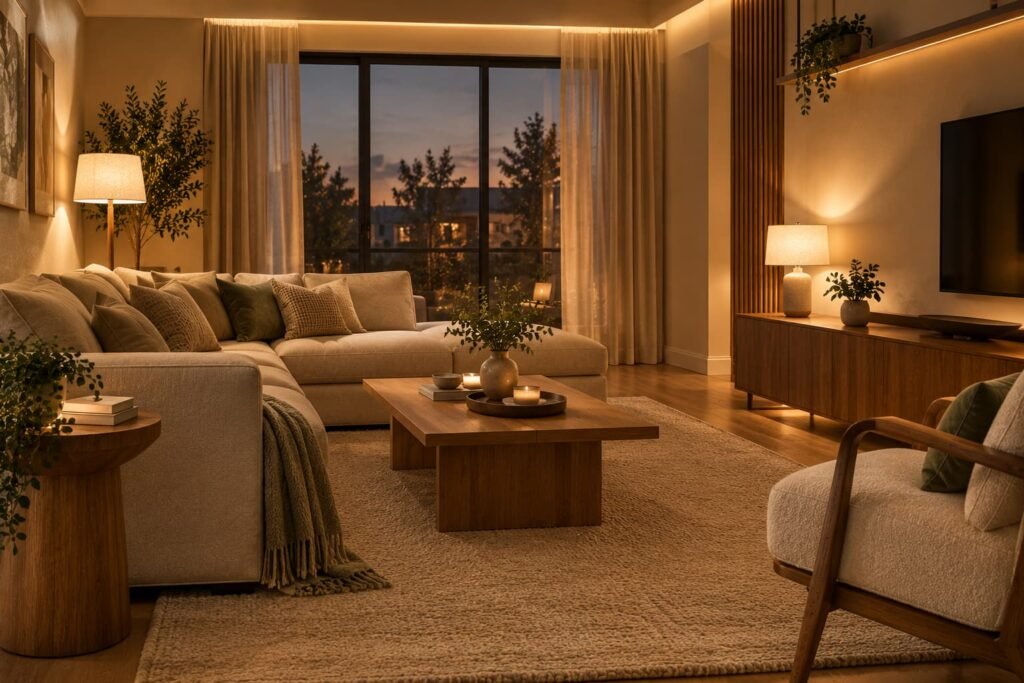
Warm ambient lighting can transform a contemporary living room from a bright daytime space into a relaxing evening retreat. Combine ceiling lights with table lamps, floor lamps, and indirect lighting where appropriate. Choose warm-white bulbs for a comfortable atmosphere, while ensuring the room still has enough brightness for reading, cleaning, and other tasks. Lamps with fabric shades or diffused glass can soften the light and reduce harsh glare. A thoughtful lighting arrangement highlights the room’s textures without making the space feel overly dramatic.
Plan the lighting around how you use the room throughout the day. Use focused light near reading chairs, softer illumination around the sofa, and suitable general lighting for shared activities. Dimmers can provide flexibility, provided the bulbs and fixtures are compatible. Avoid placing exposed bulbs where they shine directly into people’s eyes or reflect distractingly on television screens. Repeat a finish, such as black metal or brushed brass, across a few fixtures for visual consistency. Layered lighting makes a contemporary interior more functional, welcoming, and adaptable.
Conclusion
Contemporary living room design is about balancing attractive styling with everyday comfort. From warm neutral palettes and natural wood to sculptural furniture, layered lighting, and practical storage, small and large changes can help a room feel more considered. You do not need to adopt every trend to create a modern interior that reflects your preferences.
Start with the room’s layout and essential furniture, then build the look through lighting, textiles, color, and a few meaningful decorative pieces. Choose materials that suit your budget and lifestyle, and prioritize comfort alongside appearance. With thoughtful choices, your contemporary living room can feel welcoming, functional, and stylish for years to come.